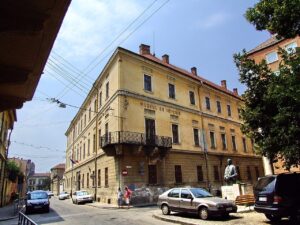
Located in Cluj-Napoca, this memorial space honors Ferenc Dávid, one of the most influential religious figures in the region’s history. As the founder of the Unitarian Church in Transylvania, he played a central role in shaping a tradition grounded in religious tolerance, intellectual inquiry, and freedom of belief. The memorial stands as a tribute not only to his life, but also to the enduring impact of his ideas.
The exhibition guides visitors through key moments of his life, from his early career and theological evolution to his leadership during a transformative period in the 16th century. Through documents, historical narratives, and interpretive displays, it highlights his role in promoting the principles later affirmed by the Edict of Torda. These elements help contextualize his work within the broader movement toward religious pluralism in Transylvania.
At the same time, the memorial explores the development of Unitarian thought, emphasizing its core values—freedom of conscience, rational faith, and openness to dialogue. Visitors gain insight into how these principles emerged and how they continue to shape the identity of the Unitarian community today. The exhibition encourages reflection not only on history, but also on the relevance of these ideas in the modern world.
As both a place of remembrance and learning, the memorial offers a meaningful experience for those interested in history, theology, and cultural heritage. It connects past and present, inviting visitors to engage with a tradition that has long championed tolerance, critical thinking, and respect for individual belief.