Traditional altar cloths form an essential part of the visual and spiritual life of Unitarian churches in Transylvania. Carefully handcrafted and richly adorned with intricate embroidery, these textiles are often created by local women as expressions of both faith and community identity. The motifs—ranging from floral patterns to symbolic geometric designs—are passed down through generations, preserving a distinct regional aesthetic while also reflecting personal devotion.
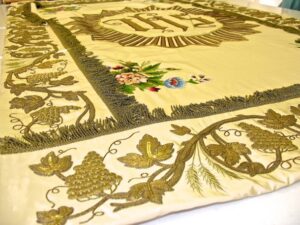
Beyond their decorative role, these altar cloths carry deep symbolic meaning. The act of creating and donating such a piece to the church is often seen as a gesture of gratitude, remembrance, or spiritual offering. In many communities, specific cloths are associated with particular families or occasions, embedding personal histories into the fabric of the church itself. As a result, the altar becomes not only a sacred focal point but also a repository of collective memory.
The artistic qualities of these textiles also highlight the broader cultural identity of the region. Techniques, color palettes, and stitching styles often correspond to local traditions, linking ecclesiastical art with everyday folk craftsmanship. Through these embroidered altar cloths, religious practice and regional artistry are seamlessly intertwined, offering a vivid example of how faith is expressed through material culture.