
Church bells have long played an essential role in the spiritual and social rhythms of Transylvanian communities. Beyond their primary function of calling the faithful to worship, their sound structured daily life—marking the hours, signaling important gatherings, and announcing moments of joy or mourning. In rural areas especially, where distances between homes could be significant, the resonance of the bell served as a unifying voice, reaching across the landscape to connect individuals into a shared sense of time and belonging.
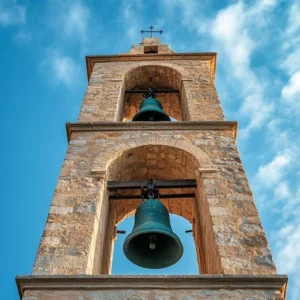
Many surviving bells date back several centuries, and their physical presence carries layers of history. Cast in bronze and often inscribed with dates, names, or religious invocations, these bells are both functional instruments and historical artifacts. Some were commissioned by local communities, while others were donated by patrons, reflecting the same traditions of support seen in other church objects. Their endurance through wars, political changes, and the passage of time makes them powerful symbols of continuity.
The sound of a bell also held deep symbolic meaning. It was believed to protect the community, ward off danger, and sanctify important moments such as baptisms, weddings, and funerals. Even today, the ringing of church bells continues to evoke a sense of tradition and collective memory, preserving an auditory link to the past while remaining an active part of contemporary religious and cultural life.