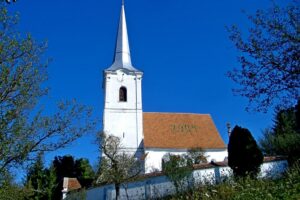
This rural Unitarian church stands as a remarkable testament to Transylvania’s layered architectural and cultural history. Rooted in the Romanesque tradition, its earliest elements are visible in the thick stone walls, rounded arches, and sturdy, almost austere proportions that emphasize durability over ornamentation. These features reflect not only the stylistic preferences of the period but also the practical realities of life in medieval Transylvania, where buildings often needed to endure both time and turmoil.
Over the centuries, Gothic influences were gradually introduced, softening the original structure with more refined details. Pointed arches, subtle vertical accents, and carefully proportioned openings hint at this later phase of development, illustrating how the church evolved alongside the community it served. Rather than replacing the earlier style, these Gothic modifications were integrated into the existing framework, creating a harmonious blend that tells a story of continuity and adaptation.
The fortified nature of the church is particularly significant. Like many rural ecclesiastical buildings in the region, it was designed not only as a place of worship but also as a refuge during times of conflict. Defensive walls, limited access points, and a compact layout reflect the persistent threats faced by local populations throughout the medieval period. In this way, the church embodies both spiritual devotion and communal resilience, standing as a symbol of protection as much as faith.
Inside, the simplicity of the interior creates a deeply contemplative atmosphere. Free from excessive decoration, the space invites quiet reflection, allowing the architectural form and natural light to guide the spiritual experience. This restraint aligns closely with Unitarian values, emphasizing clarity, humility, and inner devotion. Together, the church’s architectural features and historical context offer a powerful glimpse into the lives, struggles, and enduring beliefs of the communities that built and preserved it.